The Xero Blog

Train From the Ground Up: How Barefoot Court Shoes Support Better Pickleball Movement

Train From the Ground Up: How Barefoot Court Shoes Support Better Pickleball Movement

Court sports are won from the ground up. Whether you play pickleball, tennis, racquetball, or padel, your feet are constantly reading the court, helping you stop, shuffle, pivot, reset, and react. That’s why we work with pro pickleball trainer and Xero Shoes partner Connor Derrickson to share how he trains players to build better movement from the feet up and what to look for in footwear built for the demands of the court. Connor wears Xero Shoes extensively on the court, and he’s also trained top pickleball pros, like Anna Bright and Hayden Patriquin, and amateurs alike to move with more control, confidence, and efficiency on the court.  If you’re a pickleball, tennis, racquetball, padel, or other court-sport player who wants to feel more connected to the court and build better footwork from the ground up, read on to learn more. In This Guide: Why court sports start at your feet Barefoot court shoes vs. traditional court shoes What to look for in a court shoe Q&A with pickleball trainer Connor Derrickson How to transition to barefoot court shoes Meet the Xero Shoes 360 Rally Your Feet Are the Foundation In Court Sports Court sports aren’t linear. Unlike running or walking, which usually move you forward in one plane, court sports rely on dynamic movement. Sure you’re running on the court, but you’re shuffling side to side, running to the net, stopping quickly, backing up, all which require repeated direction changes. That constant change of direction starts at your feet. The more connected you are to the court, the more information your body has to work with as you move, reset, and react. Running shoes are usually built for forward movement and have added cushioning to support repetitive similar movement. A good court shoe should support lateral movement, secure foot placement, grip, and quick ground feedback. When you can't feel the surface you're on, or how you're contacting it (the angle, the speed, etc.), your muscles, ligaments, tendons, joints, aren't getting the information they need for more responsive movement in time. Barefoot Court Shoes vs Traditional Court Shoes Difference Traditional Court Shoes  Barefoot Court Shoes Stack Height Raises the center of gravity and often places more material between you and the court. Low-to-the-ground design helps you feel more connected to the surface beneath you. Cushioning More cushioning creates separation between your foot and the court, which  may reduce some ground feedback. A thin and flexible sole with minimal cushioning helps preserve court feel.   Drop An elevated heel can subtly shift how your body moves from the ground up. Zero-drop design keeps your heel and forefoot level, encouraging a more natural stance. Toe Box A narrower toe box may limit how much your toes can spread. A wide, foot-shaped toe box gives your toes room to spread and contribute to balance. What To Look for in a Court Shoe Pickleball has been exploding around the globe and footwork is an important part of the sport. Good footwork starts with your shoes. The way you move on the court starts with how your feet connect to the ground. For court-specific movement: Heel lockdown and secure midfoot fit to support sharp cuts Grippy outsole for quick stops and starts Durable sidewall and toe protection  For barefoot court feel and natural movement: Low-to-the-ground zero-drop design to stay connected to the court Wide, foot-shaped toe box to power through your toes You want a court shoe that’s built for lateral movement, fast reactions, and controlled resets. Traditional shoes can dull sensory feedback. That’s why barefoot fundamentals are another key part to rebuild your connection to the ground.  Xero Shoes 360 Rally was designed specifically for the court, with a tailored fit, heel lockdown, and durable outsole to keep up with the demands on the court.   Q&A with Pickleball Trainer: Training for Better Court Movement Connor helped us answer some frequently asked questions about training in barefoot court shoes.   What is the benefit of training in a barefoot court shoe? The ability to feel the ground is especially important when we’re moving and making cuts. My favorite part of Xero Shoes is the minimal stack height to feel the ground while you play. It feels like the shoe is part of your body, and for the dynamic movement needed in pickleball, that connection is huge.   What do players often misunderstand about cushioning and stability? I used to think that I needed as much cushion as possible under my feet. The more cushion, the better my joints and back would feel. I was wrong. What I needed to do was actually strengthen my feet and ankles so that I can withstand the demands of pickleball. If players focus on strengthening the lower leg first, then they can have more freedom on the court. Why does ground feel matter during quick cuts or direction changes? Your feet are basically your steering wheel, and you can't steer what you can't feel. Every time you split-step, plant, and explode in a new direction, your foot is sending a flood of information up to your brain: like weight distribution, how the court's gripping, whether you're balanced or about to trip and fall. The better that signal is, the faster and more precisely you react. When standing on an inch of foam, that feedback gets muffled, you could end up a half-beat late and a little off-balance. Sometimes, that can cost you a whole point. Ground feel turns your foot into a sensor for all of this information. What are the most common movement mistakes you see in amateur pickleball players? First, no split-step. They're flat-footed and stationary when the ball's struck, so they're already late before they move.  Second, they reach instead of step. They plant their feet and lunge their paddle at the ball instead of taking two quick adjustment steps to get behind it, and now they're hitting off-balance with no power. Third, they cross their feet on lateral movement instead of shuffling, which kills their recovery and leaves the court wide open. These are the three big ones I see every single time. The theme here is that most amateurs train their hands and completely ignore their feet and footwork. At every level I've coached, from rec players to pros like Anna Bright, footwork is what separates clean shots from scramble shots. Anna always says her goal every match is “no footwork errors”. Meaning no missed shots due to footwork. What’s one thing you wish every player understood about footwork? That footwork happens before the ball, not after. Most players think footwork is how you chase a ball down; it's actually how you're already in position when it arrives. Some of the best movers aren't the fastest, they're prepped early. They split-step on time, make fluid movements, and recover to ready position before the next ball comes. If you're constantly lunging and reaching, that's not a speed problem, it's a timing problem. Get your feet set early and the game slows way down. Then you've got time, balance, and options on every shot. Transitioning to Barefoot Court Shoes Consistency beats intensity. You don’t need to change everything overnight. Transitioning to barefoot shoes on the court will look different for everyone. Start with short training sessions, practice the fundamentals, and let your body give you feedback. Court sports are fast and reactive, so give yourself time to build confidence before jumping into long, high-intensity play. Connor developed a court-specific workout plan below, designed to activate from the ground up. Helpful tips to get started in barefoot court shoes: Start with the workouts below before going on the court.  Work through phase 1 before progressing to the next phase. When you feel ready to hit the court, start with training sessions, not full games. Wear barefoot shoes for short durations first. Use removable insoles if you want a step-down approach. Pay attention to how your body responds. If you experience any tightness in your calves, try a standard stretch by dropping your heels off the edge of a step or curb. Expert-Recommended “Train to Court” Workout Once you understand why court movement starts at your feet, the next step is putting that awareness into practice. Connor created a simple three-phase workout to help players build better foot awareness, lateral control, and quicker court reaction — starting with foundational drills and progressing into more game-like movement. Connor’s Train to Court workout is broken into three phases: Regain foot awareness and mobilitySimple balance and mobility drills to reconnect with the ground. Build court-ready control and powerStrength-based movements that mimic side-to-side court demands. Improve speed and court reactionFaster drills that help you practice quick transitions, acceleration, and deceleration. Read next: Connor's Train to Court Workout: 3 Phases for Better Court Movement  Want to take the workout with you on the go?  Download the free PDF Watch the videos for a step-by-step guide. Subscribe to the YouTube Playlist   Meet the 360 Rally Xero Shoes 360 Rally was designed for players who want the natural movement benefits Xero Shoes are known for, with court-specific features for lateral movement, quick stops, and secure foot placement. Xero Shoes product team isn’t just made up of footwear experts, they’re pickleball players, too. That’s why they spent a lot of time dialing in a shoe that lets your feet move naturally while staying stable when the pace picks up. Our Design Director Kristina Funck says, “We spent a lot of time on the internal gusset system that cups your foot to make sure you’re super stable. The 360 Rally gives you stability, power and confidence to be surefooted on the court. Our Chief Product Officer, Michael Pao says, “We’re taking what our shoe is great at  – natural movement and court feel – and enhancing it with our minimal to the max philosophy. Minimal ingredients for maximal performance.” About the Expert: Connor Derrickson is a trainer to top pickleball pros like Anna Bright and Hayden Patriquin as well as amateurs, helping players train better footwork, court movement, and body control. As a Xero Shoes partner, Connor has extensively tested the 360 Rally and worked together to develop the workout plan.  Connect with Connor: Instagram | YouTube | LinkedIn The content of this post is for educational and informational purposes only and does not constitute and is not intended to be a substitute for professional medical advice, diagnosis or treatment. Always seek the advice of a physician or other qualified health provider with any questions or concerns you may have about your health or a medical condition. 
Read More Train From the Ground Up: How Barefoot Court Shoes Support Better Pickleball Movement
What are Zero-Drop Shoes?

What are Zero-Drop Shoes?

You may have heard of the term, “zero-drop” as it relates to our shoes. But what exactly does it mean?  Zero-drop simply means your heel and forefoot are at the same height. If you’re standing barefoot on flat ground, this is your body’s natural position—balanced, aligned, and stable. Now compare that to most modern shoes. "Zero Drop" is not just a footwear industry term anymore. It’s an essential part of Xero Shoes’ barefoot DNA.  In this blog, we’ll break down what zero-drop shoes are, how they compare to traditional footwear, and why they’re a key part of natural movement. What Is “Heel Drop” in Shoes? Most traditional shoes are built with an elevated heel, meaning your heel sits higher than the ball of your foot. This design was originally intended to cushion impact in runners. But here’s the catch: That elevated heel can subtly shifts your body forward and changes how your body moves. That’s why a non-negotiable with barefoot shoes is a zero-drop design. Having your entire foot from heel-to-toe in one plane allows for natural movement. A barefoot shoe’s thin, flexible sole allows your feet and toes to bend and flex.  Zero-Drop vs. Traditional Shoes Here’s the simplest way to think about it: Traditional Shoes: Elevated heel (positive drop) Thick cushioning Stiff structureToe spring (toes pushed upward) Barefoot Shoes (like Xero Shoes): Zero-drop (level from heel to toe) Thin sole for ground feedback Flexible so your foot can move naturally Foot-shaped design for natural toe splay The Big Misconception About Zero-Drop You may have seen many footwear brands promoting “zero-drop” shoes. Sounds like a step in the right direction, right? Sometimes. But not always. Here’s where things get misleading. Not all zero-drop shoes are barefoot shoes. Not all zero-drop shoes promote natural movement. Some shoes are labeled “zero-drop,” but still: Have added cushioning that limits groundfeel Feature stiff soles that limit natural movement Include toe spring (where your toes are pushed upward unnaturally) So while the heel height might be level, the overall experience is still far from barefoot. Zero-drop alone doesn’t equal natural movement. What Actually Makes a Shoe “Barefoot” If a shoe truly supports natural movement, it’s not just about drop. It’s about the full package: Zero-drop (level heel and forefoot) Thin sole for ground feedback Foot-shaped design so your toes can spread naturally Flexibility so your foot can move naturally No forced arch support Miss one of these, and you’re not really getting the benefits people associate with barefoot shoes. We design Xero Shoes to be minimal to the max: Everything you need to optimize your body’s natural movement. Nothing you don’t. Why This Matters for You It’s easy to get caught up in labels like “zero-drop” or “minimalist.” But the real question is: Does the shoe let your foot move the way it’s designed to?That’s what actually matters. When your footwear works with your body instead of against it: Movement feels more natural Your feet can function the way they’re supposed to And comfort comes from alignment—not artificial support Or put simply: The goal isn’t just a flatter shoe. It’s a freer foot.   The content of this post is for educational and informational purposes only and does not constitute and is not intended to be a substitute for professional medical advice, diagnosis or treatment. Always seek the advice of a physician or other qualified health provider with any questions or concerns you may have about your health or a medical condition.   
Read More What are Zero-Drop Shoes?
Barefoot Shoes for Weightlifting & Strength Training

Barefoot Shoes for Weightlifting & Strength Training

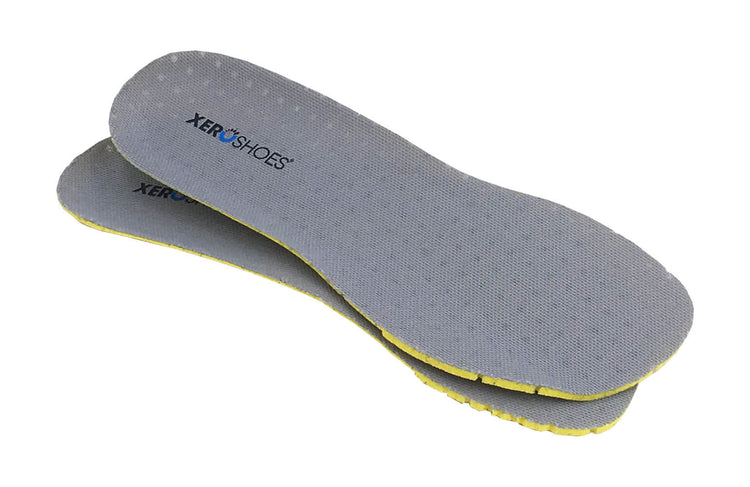
Think about the last time you went to the gym. You probably planned your outfit. But when was the last time you thought about your shoes? Unless you're a competitive lifter, chances are you just grabbed whatever sneakers you had — the same pair you run in, walk the dog, even run errands. And if that’s the case? You might be leaving strength gains on the floor. Why Do Some Weightlifters Workout Barefoot? When you deadlift, swing a kettlebell, or press a barbell overhead, what’s the first thing you feel your body do? Your feet push down into the ground. That downward force is your foundation. And if your foundation is unstable, your lift is compromised. To create real stability, your feet need three things: A wide base (toes able to spread naturally)  Ground feedback (so your brain knows what your feet are doing) Active muscular control (which begins with that sensory feedback) Think about walking on stilts. Or walking with two pillows strapped to your feet. It’s awkward, right? The higher and softer the platform, the less stable you feel. That’s what happens with thick, cushioned shoes. Foam compresses and traditional shoes that have added cushion in the heels (added heel drop) shift your weight forward. Narrow toe boxes squeeze your base. And the padding absorbs force you’re trying to send into the ground. If strength begins with the feet — and many lifters swear it does — then unstable footwear could hamper your potential. The Benefits of Working Out Barefoot Training barefoot gives you: Better balance and stability. Direct ground contact creates a solid base compared to shoes, where cushioning and heel padding can mess with your weight distribution. Improved proprioception. That’s your body’s ability to sense position and movement. When your feet feel the floor, your brain can fine-tune balance and coordination. Better form. When lifting barefoot, your feet and toes can better grip the ground and maintain balance, which translates into better technique. Natural force transfer. Instead of force being absorbed by thick cushioning, it goes directly into the ground — and back up through your body. But most gyms won’t let you lift barefoot. Going fully barefoot isn’t always practical (or sanitary). That’s where barefoot training shoes come in.   Barefoot Shoes for Weightlifting If you want the benefits of barefoot training with protection, a barefoot, zero-drop shoe is your best bet. Zero drop means your heel and forefoot sit level with each other. No artificial forward tilt. No raised heel throwing off your posture. Here’s why that matters: You stay closer to the ground. Your weight stays balanced. Your mechanics stay natural. Xero Shoes are designed with: A thin, flexible sole for real ground feel A wide toe box so your toes can spread for stability Lightweight construction so your shoes don’t become ankle weights Research even shows that simply walking in minimalist footwear strengthens foot muscles as effectively as dedicated foot exercise programs. Imagine what lifting in them can do. Strong feet = stronger foundation. Stronger foundation = stronger lifts. Tips For Transitioning To Barefoot Exercise If you’ve been wearing thick, cushioned shoes for years, your feet have likely been underworked. Don’t rush the transition. Start Slow If you’ve never worn minimalist shoes before, you’ll want to introduce them the way you would any new exercise or gear—slowly.  Build Foot Strength You need to wake up your foot muscles, so start with easy foot balances and strength exercises. A 2019 study by Dr. Sarah Ridge found that walking in minimalist shoes strengthens the muscles in your feet as much as following a foot strengthening exercise program. Increase Gradually As your feet and muscles get stronger, slowly increase the duration and intensity of your workouts. Add just one new exercise or movement at a time to avoid overexertion. Listen to Your Body Some muscle soreness is normal. Rest when needed. Don't push yourself too hard too quickly or ignore any discomfort. The content of this post does not constitute and is not intended to be a substitute for professional medical advice, diagnosis or treatment. Always seek the advice of a physician or other qualified health provider with any questions or concerns you may have about your health or a medical condition.  
Read More Barefoot Shoes for Weightlifting & Strength Training

latest News

How to Perfect Your Balance

How to Perfect Your Balance

Have you always thought that you just aren't someone with good balance and that's that? Think again. It is totally possible to improve your balance! So how do you do it?  Just like a weightlifter needs to lift progressively heavier weights to get stronger, if you want to improve your balance, you need to challenge your balance by placing yourself in unstable positions. In doing so, your body will develop the reflexes needed to maintain balance in that unstable state. This means that you need to be doing exercises that make you wobble...for if you are not wobbling, you are not being challenged. In time, a given activity that once made you wobble, will soon become easy and so you will need to move on to a more difficult activity.Safety first: If you’re concerned that you might fall during a balance exercise, always keep your hand close to some type of support like a sink, counter, or sturdy chair. However, when performing the exercises, you should keep your hands just above your security support and only use them when you feel like you may fall. By having your hands just above the support, you will not rely on your hands to steady yourself and instead will use the balance reflexes found in your feet, legs, and torso. So, let's begin. For an extensive list of balance exercises I regularly use as a physical therapist for patients, head to  https://programs.perfectingmovement.net/catalogIf those exercises are either too easy or too difficult for you, all balance exercises can be made more difficult by reducing the amount of visual input you are receiving. This can be done by performing the activity in a darkened room, with eyes squinted, or with eyes closed. In this way, it will limit the amount of visual input your brain receives and so will force you to rely more on your other systems for sensory input.Exercises can also be progressed/modified by standing on an unstable surface such as a foam pad, BOSU ball, wobble board or even a slack line, all of which of course will make you wobble more. As always, anytime you are wobbling, you are challenging yourself and are actively in the process of making your balance better!In this program, I have balance exercises for people of all ages ranging from high-level athletes to geriatrics.So, are balance exercises for athletes too??Absah-freakin-lutely...having good balance as an athlete is crucial toward preventing injuries. This is because good balance is essentially having good neuromuscular control. Without good neuromuscular control, one loses control during movement, and so is at a much higher risk of getting injured. Think about it: Running, cutting, sprinting, braking: all of this happens on one leg at a time. Therefore it is essential to have good neuromuscular control on one leg; ie good balance. Squats and deadlifts are great exercises, but they won’t improve your control/balance on one leg needed for activities like sprinting, cutting, running, and pivoting. Therefore, awesome single balance = not getting hurt = being a real winner.Footwear which can immediately create better balance:When using a thinner, flatter shoe with a wide toe box, one typically has better balance. This type of footwear is called “minimalist”, or “barefoot” footwear. Xero Shoes are definitely my preferred minimalist shoe brand.Here are some of the characteristics and benefits of a minimalist footwear: A wide toe box which allows the toes to splay, creating a wider base of support. A flat sole without support which does not throw off the natural positioning of the foot and ankle. A thin sole which places one’s center of gravity lower to the ground to create improved stability. A thin sole which also allows one to feel the ground more easily. In this way the brain has faster and more descript sensory input needed to create more rapid and effective balance reflexes. In contrast, most traditional shoes have thicker soles, motion limiting “support”, narrow toe boxes, and elevated heels. All of this will disrupt the body’s natural sensory and reactive needed to maintain balance.As a physical therapist, I have had AMAZING success in getting my patients in a minimalist footwear for both reducing pain and improving balance. Once my patients start using minimalist footwear, it is extremely common that they report feeling more balanced and more confident on their feet.Lastly, it is essential that one learns how to walk with proper technique in order to prevent a loss of balance, slip, or a rolling of the ankle. This is because walking with good technique places the foot more beneath the center of mass so that you have better control. Often people take an excessively long stride where the foot is too far forward from the center of mass. The further the foot is away, the less control you have and so are at higher risk of injury. As a guy who used to constantly sprain his ankle, I no longer do so. What changed? I almost exclusively use minimalist shoes and have improved my walking and running techniques. Here is a great video resource to learn how to walk the right way from PerfectingMovement.Net.– James O’Brien MSPT, OCS, CSCS,  from PerfectingMovement.netThe content of this post does not constitute and is not intended to be a substitute for professional medical advice, diagnosis or treatment. Always seek the advice of a physician or other qualified health provider with any questions or concerns you may have about your health or a medical condition.