The Xero Blog

The Shoes Powering Isaiah Stewart in the Playoffs

The Shoes Powering Isaiah Stewart in the Playoffs

When Isaiah Stewart takes the floor in the playoffs, he's not wearing the usual names you'd expect to see on an NBA court. What most people don't know is that he's been doing it in a minimalist shoe that most of the league wouldn't dare try. He's playing in Xero Shoes X1, the barefoot basketball shoe built on the belief that less is more.  "I feel like I’m gaining a lot by switching from a standard basketball shoe. I feel very grounded. I play with a lot of force, strength and power, and the Xero X1 shoes allow me to function like the human body should." For the playoffs, you'll spot Isaiah in his exclusive Warrior Red colorway, designed in collaboration with Xero Shoes' product team. It pulls from his mindset: aggressive, relentless, fearless. It's built for players who go all in. Pat Benson of Sports Illustrated interviewed Isaiah at the beginning of the season to learn more on why he made the switch. Read more: Isaiah Stewart Stays Ten Toes Down in Barefoot Basketball Shoes Do Minimalist Shoes Work for Basketball? The instinct for athletes sometimes is about "going bigger" — more cushion, more support, more tech. Stewart went the other direction, and the X1 was engineered to back that decision up at the highest level: Lightweight Power Pilot testing indicated the X1 may generate higher peak ground reaction forces than traditional basketball shoes — translating to more powerful jumps, faster acceleration, and superior energy transfer from floor to foot. When Stewart says he plays with force, this is part of why.  Court Grip A multidirectional traction pattern supports lightning-fast direction changes and quicker reactions. On a playoff court where every half-step matters, that kind of grip isn't a nice-to-have — it's a difference-maker. Balance & Control A zero-drop sole keeps you balanced and connected to the floor, improving stability, ground awareness, and proprioception. Every move feels intentional. Every cut, every post-up, every closeout — responsive and grounded. Making the Switch: Isaiah's Tip "Transition is different for everyone. I started by walking barefoot and wearing barefoot shoes, plus I did foot exercises. So, when I made the transition to the Xero X1 basketball shoes, it felt natural to engage my feet and feel them function like they should."  
Read More The Shoes Powering Isaiah Stewart in the Playoffs
Genesis DIY Sandal Kit: Customize Your Own Barefoot Sandals

Genesis DIY Sandal Kit: Customize Your Own Barefoot Sandals

You asked. So we brought it back. The Genesis DIY Sandal Kit returns to where it all began — a simple, handmade solution that grew into something bigger. When we paused the DIY kit during our Shopify migration in October 2025, we didn’t expect much reaction. We were wrong. You kept asking for it — again and again. What started as our original product is still one of the most meaningful. That’s why it’s back, and why we’re calling it what it is: the Genesis DIY Sandal Kit. The Origin Story Before Xero Shoes was a brand, it was a solution. Back in 2009, founders Steven Sashen and Lena Phoenix weren’t trying to build a company — they were solving a personal problem. Steven was a Master’s All American Sprinter, but his training was regularly sidelined by injury. Inspired by Born to Run, Steven tried running barefoot and felt an immediate difference.  You can’t be barefoot all the time, so that’s when he tried making his own huaraches, same sandals worn by the Tarahumara tribe in Born to Run. Others in his run club wanted a pair, too. What started with friends in Boulder quickly spread. People weren’t just wearing the sandals — they were making them. Choosing their own cords. Experimenting with tying methods. Creating something uniquely theirs. Everything was done by hand. Steven and Lena turned the living room into the workspace. They sourced cord and rubber from hardware stores and shipped kits from the local post office. That’s when it became clear: this wasn’t just a sandal. It was a different way to think about footwear. The DIY Kits built a quiet, cult following among barefoot runners, minimalist hikers and conscious consumers. Over time, the design showed up in unexpected places — including Australia Fashion Week in 2023, and across fashion and culture in 2024 and 2025 as minimal, functional sandals re-emerged. But this isn’t about trend cycles. The Genesis DIY Sandal Kit is the origin of everything we do. Pictured below is Steven and Lena with more than 500 orders (2013). Re-Introducing the Genesis DIY Sandal Kit This is the starting point. The Genesis DIY Sandal Kit strips things back to what matters: a thin, flexible sole and a durable cord system. No unnecessary structure. No overbuilt features. Just what you need to move naturally. It’s simple by design — and that simplicity is intentional. But what makes this different isn’t just how it feels. It’s how you experience it. You don’t just open a box and put something on. You open a box and start creating. You choose the look. You control the fit. You shape the final result with your own hands. That’s what this kit offers: A hands-on, customizable design A sense of ownership and craftsmanship A simple, approachable process from start to finish Because this isn’t just something you wear. It’s something you make How to Make Your Genesis DIY Sandals Ready to create your own customized sandal? Everything you need to build your sandals is included—plus a few simple tools you likely already have at home. Your Genesis DIY Sandal Kit comes with the following:  CordChoose from 18 different colors. The 100% polyester cord is soft, durable, water-resistant, and designed to hold its color over time. Want to switch up your look later? You can grab additional cord options here. FeelTrue Outsole Pick between Black or Mocha Earth, with two thickness options: 4mm or 6mm. Both give you a close-to-the-ground feel while still protecting your feet. (For reference, our Genesis sandal is 5.5mm.) Hole Punch Used to create the toe hole for your custom fit. You’ll also need a few basic tools (not included): Hammer Lighter Magazine or thick paper (to protect your surface while punching the hole) Optional: pliers, bobby pin, or lacing tool for easier threading The video below provides a visual, or you can also follow the step-by-step written instructions. Prep Your Sandals Step 1: Find Your Size Before buying your sandals, determine your foot length (you’ll select from options A–K). Place a blank piece of paper on the ground against a wall Stand with your heel touching the wall Mark your longest toe Measure heel to toe with a ruler Choose the closest size. Step 2: Mark Your Toe Hole Placement Now it’s time to customize your fit. Place your foot on the sole and mark a spot about ¼ inch in front of the webbing between your big toe and second toe. Prefer a slightly different feel? You can shift the hole slightly toward your second toe. Step 3: Punch the Toe Hole Place the sole on a magazine or thick surface. Hold the punch straight (perpendicular) to the rubber. Use a hammer to punch your hole. Depending on the 4mm or 6mm outsole, you may need to do a few whacks to punch through the rubber. Note: The 6mm sole may require a few extra hits. Step 4: Create a Stopper Knot Before lacing, you’ll need a stopper so the cord doesn’t pull through the toe hole. You have two options: Option A: The Figure-Eight Knot Form the knot: Take the end of your lace, go over the top, wrap it around, and pull it back through the loop you created. Flatten it: As you pull tight, shape the knot with your fingers to keep it as flat as possible so it won’t bunch up under your foot. Seal the knot: Briefly apply a lighter's flame to seal the knot without burning it. While warm, press it flat with your fingers or a pair of pliers. Option B: The Melted Lace Bead (For polyester or nylon laces only) Fray the end: Shred or fray the end of your lace. If your lace has a metallic reflective tracer, cut it off first, as it burns at dangerous temperatures. Melt the bead: Carefully use a lighter to melt the frayed ends into a bead. Try to avoid letting it catch fire, though it may happen. Shape and cool: Immediately press the melted end firmly onto a metal tool, like pliers, to flatten it. Let it cool and harden completely for about a minute. Step 5: Make Threading Easier Getting the cord through the holes can be tricky. Try one of these: Melt a firm tip: Heat the end of the lace with a lighter (do not burn it) and press it with your fingers to form a firm, plastic-like tip that pushes easily through the rubber hole. Remove the core: If the lace is still too thick, pull the inner core out by about half an inch and cut it off. Stretch the outer lace back over the empty space, heat it, and pinch it into a smaller, firmer point to push through. Use a hairpin tool: Feed the lace through the looped end of the included hairpin lacing tool. Push the two prongs of the hairpin through the sole's hole, and use pliers to grip and pull the pin (and the lace) completely through. Now you’re ready to actually lace your sandals! Lacing Your Genesis DIY Sandals In this video, you can see how a little bit of handiwork and creativity turns into your own unique sandals from our Genesis DIY Sandal Kit. Don’t worry, it’s easier than it looks! Step 1: Thread the cord through the toe hole Insert the cord through the toe hole from bottom to top. The knot should be on the bottom of the sole. Step 2: Thread the cord through the outside ankle hole Bring the cord to the outside ankle hole and thread it from top to bottom. Bring the cord toward the front of the sandal, then loop it underneath and back around to create a loop around the outside ankle hole. Step 3: Run the cord across the heel Take the cord across the back of the sandal where your heel strap will sit. Step 4: Thread the cord through the inside ankle hole Thread the cord through the inside ankle hole from top to bottom. This time, loop the cord from the back to the front to create a loop around the inside ankle hole. Step 5: Tie the main knot Starting with the cord coming from the inside ankle hole: Loop it over and then under the top cord coming from the toe hole. Then loop it over the inside ankle loop and over the outside ankle loop. Thread the cord through the triangle-shaped opening created by the cords. Pull tight. This secures the main structure of the sandal. Step 6: Create a second cord pass.  To create the double-cord design: From the center knot, bring the cord down toward the inside ankle loop. Loop it under the top cord. Then bring it over the cord that forms the heel backing. This creates a locking wrap that helps hold the strap in place. Step 7: Lace around the heel Bring the cord around the back of the heel: Loop it under the outside ankle loop Then under the lower heel cord Then over the top cord coming from the toe post At this point, you should see two even lines of cord running from the center huarache knot, around the ankles, and across the heel. Step 8: Finish the final knot Slip the sandal on your foot before tying the final knot and trimming excess cord. To secure everything: Slightly loosen the center knot Thread the cord through once more Pull tight to lock it into place Trim off remaining cord Step 9: Adjusting the fit The final step is all about personal preference. Adjust until the sandal feels secure and comfortable on your foot.   Everyone will have their own preference for the final fit for the knot placement, cord tension and footbed.  Knot Placement: Adjust top knot to what feels right – closer to your toes or further back to your shin. Cord Tension: You’ll want the cord to feel snug but comfy, likely fitting a finger or two under the cord.  If your sandals feel too loose, the footbed can move around under your foot or the cord can rub your foot. Footbed: You can trim the footbed with a pair of scissors to better fit the shape of your foot. Ensure there are a few millimeters of rubber in front of your longest toe and behind your heel. Once the fit feels right, you do not need to untie the knot each time. You can simply slip the heel strap on and off. You’ve done it! We can’t wait to see what you design! Tag us @xeroshoes to show off your style.  
Read More Genesis DIY Sandal Kit: Customize Your Own Barefoot Sandals
What are Zero-Drop Shoes?

What are Zero-Drop Shoes?

You may have heard of the term, “zero-drop” as it relates to our shoes. But what exactly does it mean?  Zero-drop simply means your heel and forefoot are at the same height. If you’re standing barefoot on flat ground, this is your body’s natural position—balanced, aligned, and stable. Now compare that to most modern shoes. "Zero Drop" is not just a footwear industry term anymore. It’s an essential part of Xero Shoes’ barefoot DNA.  In this blog, we’ll break down what zero-drop shoes are, how they compare to traditional footwear, and why they’re a key part of natural movement. What Is “Heel Drop” in Shoes? Most traditional shoes are built with an elevated heel, meaning your heel sits higher than the ball of your foot. This design was originally intended to cushion impact in runners. But here’s the catch: That elevated heel can subtly shifts your body forward and changes how your body moves. That’s why a non-negotiable with barefoot shoes is a zero-drop design. Having your entire foot from heel-to-toe in one plane allows for natural movement. A barefoot shoe’s thin, flexible sole allows your feet and toes to bend and flex.  Zero-Drop vs. Traditional Shoes Here’s the simplest way to think about it: Traditional Shoes: Elevated heel (positive drop) Thick cushioning Stiff structureToe spring (toes pushed upward) Barefoot Shoes (like Xero Shoes): Zero-drop (level from heel to toe) Thin sole for ground feedback Flexible so your foot can move naturally Foot-shaped design for natural toe splay The Big Misconception About Zero-Drop You may have seen many footwear brands promoting “zero-drop” shoes. Sounds like a step in the right direction, right? Sometimes. But not always. Here’s where things get misleading. Not all zero-drop shoes are barefoot shoes. Not all zero-drop shoes promote natural movement. Some shoes are labeled “zero-drop,” but still: Have added cushioning that limits groundfeel Feature stiff soles that limit natural movement Include toe spring (where your toes are pushed upward unnaturally) So while the heel height might be level, the overall experience is still far from barefoot. Zero-drop alone doesn’t equal natural movement. What Actually Makes a Shoe “Barefoot” If a shoe truly supports natural movement, it’s not just about drop. It’s about the full package: Zero-drop (level heel and forefoot) Thin sole for ground feedback Foot-shaped design so your toes can spread naturally Flexibility so your foot can move naturally No forced arch support Miss one of these, and you’re not really getting the benefits people associate with barefoot shoes. We design Xero Shoes to be minimal to the max: Everything you need to optimize your body’s natural movement. Nothing you don’t. Why This Matters for You It’s easy to get caught up in labels like “zero-drop” or “minimalist.” But the real question is: Does the shoe let your foot move the way it’s designed to?That’s what actually matters. When your footwear works with your body instead of against it: Movement feels more natural Your feet can function the way they’re supposed to And comfort comes from alignment—not artificial support Or put simply: The goal isn’t just a flatter shoe. It’s a freer foot.
Read More What are Zero-Drop Shoes?

latest News

The Barefoot Running world has lost a true friend

The Barefoot Running world has lost a true friend

There are a number of semi-celebrities in the barefoot running world (that is, famous in the niche, but not necessarily well known to the general public).But there's one man whose influence and value to those of us who support and benefit from natural movement eclipses all the celebs combined.His name is Bill Katovsky and this post is an all-too-brief and undeniably insufficient memoriam, as Bill unexpectedly died last week.Only those truly "in-the-know" and attentive to the goings on in the barefoot and minimalist movement (and the seeming backlash from maximalist footwear), have a glimmer into how much Bill contributed, since Bill was in the background more often than the foreground. And if I list his credits, I'll surely underestimate Bill's level of responsibility. From co-authoring books, like Tread Lightly, to writing innumerable articles, to co-creating and managing the idea of Natural Running Center-affiliated stores, to maintaining the online presence for NRC... many of you reading this now are here, in part, thanks to Bill's efforts.Personally, my relationship with Bill was one that could only have existed in the Internet-age. He found me online, and then called for a "brief chat" that lasted 6 hours.We never met in person, though I regularly offered to fly him to Colorado so we could plan our barefoot takeover of the world.We spoke almost weekly, usually for hours at at time. On average, Bill and I exchanged at least one email per day. And I say "on average" because I might not hear from Bill for a few days, but when he was on a creative rant, I'd get 10 or 20 within minutes of each other.Putting into practice the myriad marketing ideas that Bill tossed in my direction would take more than a lifetime for more than one company.Bill had an encyclopedic memory of all-things running and triathlon (he coined the term triathlete, and founded the magazine of that name). And we shared a deep passion for finding the underlying truth about human performance, and all forms of comedy (hence our 2 hour "chats").Bill was always a huge supporter of me and of Xero Shoes, both as a product and a business. He was the ultimate sounding board. Generous with his mind and ideas. And his death is truly a loss for the barefoot and natural movement community.We can only hope to honor his memory by bringing to fruition all that he wanted for us and the world.You can find more about Bill from some who were closer to him than I:From Nick Pang - http://naturalrunningcenter.com/2015/11/09/bill-katovsky-1957-2015/From Roy Wallack - http://www.slowtwitch.com/Opinion/Bill_Katovsky_R.I.P._5456.htmlFrom Scott Tinley - http://www.trihistory.com/t-3/death-voice#/0
From "broken" to barefoot to Xero. Greg Makuch's amazing story

From "broken" to barefoot to Xero. Greg Makuch's amazing story

Greg Makuch's story is one that EVERY runner -- barefoot or shod -- should hear. I won't say any more until you watch it, below.   What I LOVE about Greg's story is how he brought a sense of wonder and curiosity to his journey. "I'll never run again... really?" "These sandals make noise... wait, if I'm running uphill they're silent so...?" Greg listened to the feedback from his body and his Xero Shoes and became his own best coach. Don't overlook how seeing himself on video was such a turning point. It's amazing to me how often we're doing something with our body that's VERY different than what we think we're doing. And, while Greg's is a story about running... do remember that you don't have to run to enjoy Xero Shoes ;-)  In fact, most of our customers do just about everything but run in their Xeros -- walk, hike, paddle, play, chill. You name it. Feel the Freedom. Feel the Fun. Feel The World with Xero Shoes.
The World's Fastest Triathlon

The World's Fastest Triathlon

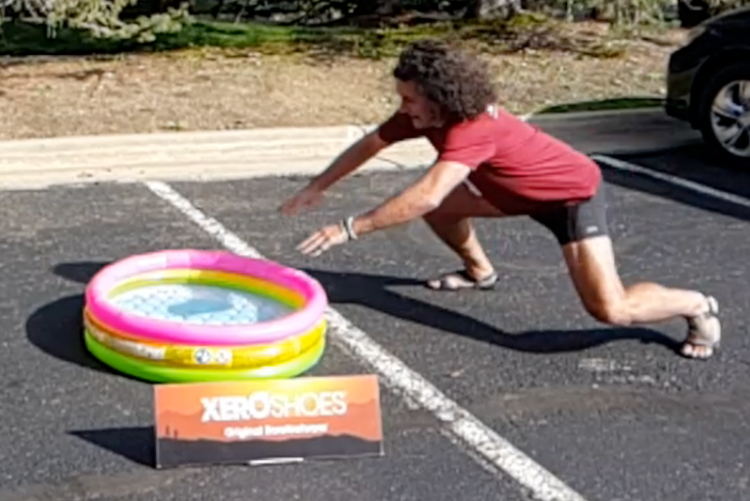
I just did the world's fastest triathlon. A TRUE sprint triathlon.That was #mytri.Share this and let's get more people doing THEIR triathlons.Now let me see yours!

Watch GOSHEN for FREE here

Watch GOSHEN for FREE here

The filmmakers of GOSHEN, an award winning documentary highlighting the benefits of the Tarahumara running tribe's "barefoot sandals" are offering FREE VIEWING of the full film for two days only -- Saturday and Sunday, October 10-11.Watch GOSHEN here, or rent it for free for Saturday/Sunday by going to www.GoshenFilm.com/buy-dvd.html and use the coupon code GOSHENXERO. Remember this free offer is only valid on October 10-11, 2015.(The preview will show, below, until Saturday, when the ACTUAL film will be available.)GET THE DVD TODAY!

Bernard Lagat Won't Run Barefoot?

Bernard Lagat Won't Run Barefoot?

This just in from the "WHAT A SHOCK... NOT" category:Runner who gets paid millions from shoe company says he won't run barefoot!In an interview with The Guardian, Bernard Lagat, the Kenyan-American 13-time medal winning middle- and long-distance runner, is asked by Kate Carter:So, um, ever run barefoot?Bernard's response:[Laughs] Well, since I came to the developed world I’ve never run barefoot and I always say there’s no way on earth I am ever going to run barefoot. I did a good 15 years or so of barefoot running, walking. Now I see the shoes and I’m like, “That’s my best friend for life!” Never since I crossed the big pond! My shoes will always be on my feet for ever.Now let me see if I get this straight. A guy who gets paid millions from his shoe company sponsor will never go barefoot again.Let's say the guy really does simply love his shoes. Here's the question that Kate should have asked as a follow up:Bernard, do you think that 15 years of running barefoot helped you in some way, like improving your form and eliminating overstriding, or strengthening your feet and legs, or teaching you to adjust your gait and cadence, or improving your reflexes or sensorimotor skill? And please answer as if whatever you say will not be read by the shoe company that has helped make you a millionaire.Frankly, I couldn't care less what Bernard thinks or believes about running barefoot. The guy is one of the best middle- and long-distance runners ever. By definition that makes him a freak, an outlier.I'm not sure that a 5'8" guy who weighs 134 pounds and runs 1500 meters (just shy of a mile) in 3 minutes, 26 seconds, is someone whose experience extrapolates to normal humans.Be that as it may, what really gets to me is the headline:Bernard Lagat: 'There’s no way on earth I am ever going to run barefoot again!'Out of all the interesting and provocative and useful things Bernard said, I'm sort of dumbstruck why this became the headline. It's not like the world is FULL of barefoot runners who will be impacted by Bernard's thoughts. There aren't even a gaggle of runners on the fence about running barefoot who will see the headline and think, "Thank God I know Bernard won't run barefoot; now I don't have to either!"It's a headline that is only attention-grabbing to a small number of humans. So why all the fuss?I'm sure it had nothing to do with Bernard being sponsored by a shoe company that makes money every time some runners sees him in their shoes, and who is featured in the photograph at the top of the article (shown below so you know who it is).
Make your own Sandals - DIY huaraches

Make your own sandals, Janice style ;-)

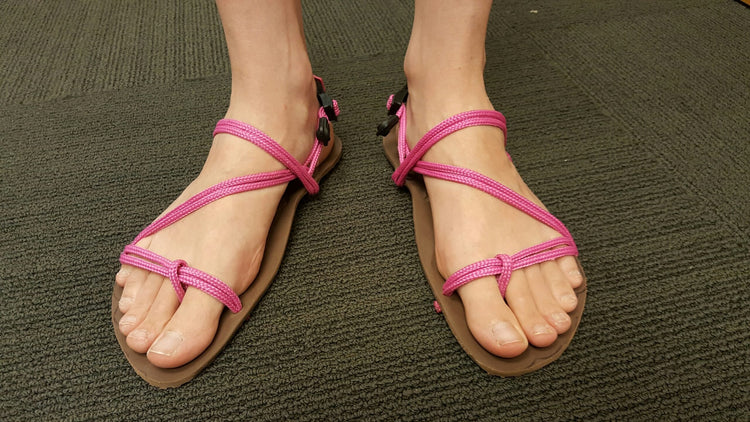
Our Customer Happiness Manager, Janice, has been on a roll, creating new DIY sandal designs.This latest was inspired by our Z-Trek sandals. It uses the "loop" idea from this sandal, and the Heel Strap from our Amuri sandals.Remember, when you make a kit that has laces touching the ground (like the outside edge by her pinky toes), you'll want to protect them from abrasion. We recommend using Shoe Goo.

Feet With Built In Support

New Technology in Ankle support, Arch support, Flat Feet and High Arches

Do you need arch support?Ankle support?If so, try the newest product on the market today, YOUR FEET!New and improved for 2022 with built-in arch support and ankle support!You've tried everything else — shoes, orthotics, inserts — now try YOUR FEET!Their flexible construction with almost 1/4 of all the bones and joints in your body, and clever 5-pronged design, allow for balance, propulsion, gripping, and much, much more.Plus, they look pretty cool, too!The articulated connection to the lower leg (sold separately) keeps you upright and moving, even as you traverse uneven terrain (yes, they're perfect for hiking, no boots required)!With continued use, YOUR FEET! will take you wherever you want to go, with confidence, grace, and strength.Maintaining YOUR FEET! is simple and only requires soap and water. But for a unique experience, you may try one of the many FEET! outlets that provide decorative accessories and check your Yellow Pages for "Pedicure".Try YOUR FEET! today.Check out the bottom of YOUR LEGS! to get yours.(oh, and for the times where YOUR FEET! need a bit of protection and some extra style, try Xero Shoes, too...) 

Stand Up Paddle Board with Xero Shoes

Stand Up Paddle Boarding Sandals

Some people love the feeling of sand between their toes.Others. Not so much.Same thing with stand up paddle boarding. Some love to SUP bare footed. Others want a bit of protection, especially if they're somewhere that they have to jump off onto a less-than-ideal surface (think coral, or rocks, or ewwy-gooey things ;-) ).We've heard from Xero Shoes customers who wear their sandals on their boards. Others just use them to get to and from the water (stick 'em in your pocket when you're on the board).Similarly, we've got a bunch of sea kayakers, canoeists, and rafters who've taken their Xeros on some pretty sweet water.You, too?Send us your photos and let's see.

Sandals for Barefoot Running? KWGN Investigates.

Sandals for Barefoot Running? KWGN Investigates.

Vicky Evans from KWGN came out to our new office to check out Xero Shoes.What did she think? Watch the video and find out... While Vicky emphasized barefoot running, people enjoy Xero Shoes for, well, anything you can imagine doing in a sandal... and things you would NEVER do in a flip flop: A walk on the beach A hike in the woods A workout in the gym Keeping that "grounded" feeling you get after a yoga class Paddle boarding Approaching a climb We've even had people run 100+ mile ultramarathons in Xero Shoes!Check 'em out here

GOSHEN Movie Trailer - Watch it here!

GOSHEN Movie Trailer - Watch it here!

As many of you know, Xero Shoes were inspired by the Tarahumara of Mexico. First, we were inspired by their story of running enjoyably and injury-free into their 70s and beyond.Then we were inspired by the fact that they ran barefoot or in huaraches -- sandals they made out of scraps of tire and leather.The Tarahumara are also facing serious challenges. A long-running drought, problems with local drug cartels, inaccessibility, medical problems.For all of these reasons, we support the Tarahumara with a percentage of the sales of our custom-made Xero Shoes.And to further support the Tarahumara, we're thrilled to share the documentary GOSHEN with you. Filmmakers Dana Richardson and Sarah Zentz's movie, GOSHEN, reveals how the Tarahumara tribe's ancient diet and active lifestyle could not only transform your personal health and fitness, but may be the key to preserving Tarahumara culture as well.Watch the trailer, below. Own the GOSHEN DVD Today!

TrailMax Ultra Running Sandal

TrailMax Ultra Running Sandal

Introducing the new TrailMax running sandal.The USA-made sports sandal ingeniously combines the benefits of zero-drop, barefoot footwear with jaw-dropping 65 mm (5.26 inch) of dense, anti-memory foam rubber in the sole for maximum cushioning support.The TrailMax weighs less than the Hoka but boasts more than twice the stack height. According to Boulder-based TrailMax’s creator and company president and retired orthopedist, Dr. C.U. Canyon, “This shoe was specifically developed for ultra runners who want even much more soft, springy support for all the wear and tear on their legs that running on rocky or uneven terrain for hours on end produces."The TrailMax eliminates muscle use and natural foot movement," says Canyon. "Less exhaustion means more miles... way more than you should run otherwise." One warning Canyon offers, "If you step on a pea, you'll really feel it."The TrailMax sells for $499 and will be available online April 1 and at select specialty running stores.

Paleo Diet + Barefoot Running = ?

Paleo Diet + Barefoot Running = ?

Are you on the Paleo diet, or curious about it?Many people who discover paleo -- and I'm neither endorsing it or bashing it in this article -- move past the diet and into the "lifestyle," looking to move and live more like our hominid ancestors. And, not surprisingly, one way to recapture our movement history is by running in bare feet.Neanderthals didn't wear Nike and you don't need to either.All that said, I had the privilege of getting interviewed by Aaron Olson of www.paleorunner.orgCheck it out here, then let me know what you think in the comments, below...What do we talk about? Are sore calves and Achilles necessary when learning to run barefoot? Will Xero Shoes protect you if you're trail running? Why doctors who criticize barefoot running are usually complete morons! Are there any times where you need shoes? Can you run fast in huarache running sandals? What it's like to be on Shark Tank Why you need to USE your feet the way they're made to be used Do I eat Paleo? What do I eat? Enjoy!The content of this post does not constitute and is not intended to be a substitute for professional medical advice, diagnosis or treatment. Always seek the advice of a physician or other qualified health provider with any questions or concerns you may have about your health or a medical condition.