latest News
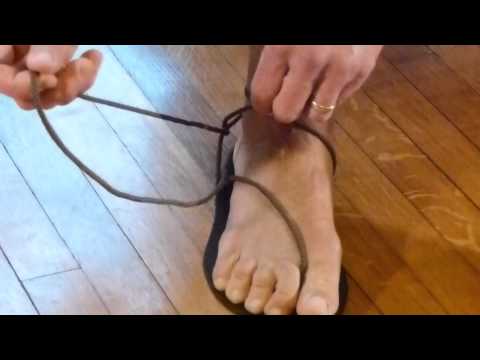
Randy's Marathon Huarache Tying Style
Randy Kreill is an ultra runner who loves his Xero Shoes.This is the tying style he came up with for his races.First, a few tying tips and notes:Tying the Lace knot:This is the knot we most commonly use, especially with our 100% polyester laces. The "Lace Bead":This is the smallest "knot" you can make for your Xero Shoes. Tying a Figure-8 knot:If you have our original laces with the nylon core, you'll want to use this knot. Lacing tips:The basic running sandal tying patternRandy's Marathon Tying StyleStep-by-Step instructions coming soon!

Ultra-minimalist Fisherman Sandals
Similar to the Ultra-minimalist Hitch style, it's a single lace barefoot sandal tying pattern. Add a Fisherman's knot and you have something comfy, without a knot at the top of your foot.Once you get the tension just right, you slip 'em on and off in a second. People use this tying style for everything from walking to running marathons.First, a few tying tips and notes:Tying the Lace knot:This is the knot we most commonly use, especially with our 100% polyester laces. The "Lace Bead":This is the smallest "knot" you can make for your Xero Shoes. Tying a Figure-8 knot:If you have our original laces with the nylon core, you'll want to use this knot. Lacing tips:The basic running sandal tying patternUltra-minimalist Fisherman Tying Style(this video was made with our old name, from our old site, Invisible Shoes)Step-by-Step instructions coming soon!
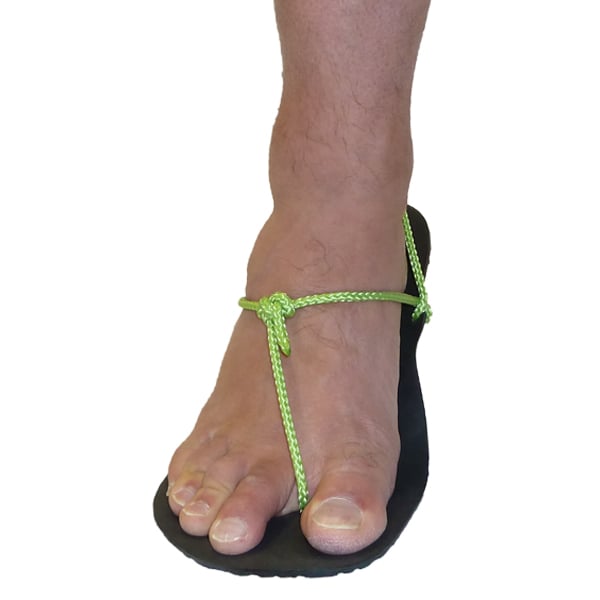
Ultra-minimalist Hitch
Perhaps the simplest tying style for minimalist running sandals there is!In fact, for some it feels TOO simpleOnce you get the tension just right, you slip 'em on and off in a second. People use this tying style for everything from walking to running marathons.First, a few tying tips and notes:Tying the Lace knot:This is the knot we most commonly use, especially with our 100% polyester laces. The "Lace Bead":This is the smallest "knot" you can make for your Xero Shoes. Tying a Figure-8 knot:If you have our original laces with the nylon core, you'll want to use this knot. Lacing tips:The basic running sandal tying patternUltra-minimalist Hitch Tying Style(this video was made with our old name, from our old site, Invisible Shoes)
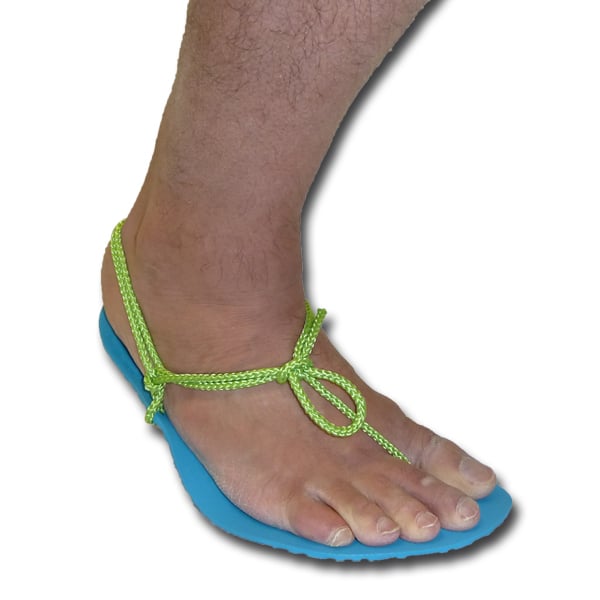
Xero Loop
This is another great slip-on tying style for Xero Shoes.The loop in the front gives you some fun decorative options.Once you get the tension just right, you slip 'em on and off in a second. People use this tying style for everything from walking to running marathons.First, a few tying tips and notes:Tying the Lace knot:This is the knot we most commonly use, especially with our 100% polyester laces. The "Lace Bead":This is the smallest "knot" you can make for your Xero Shoes. Tying a Figure-8 knot:If you have our original laces with the nylon core, you'll want to use this knot. Lacing tips:The basic running sandal tying patternXero Loop Tying StyleStep-by-step instructions coming soon!
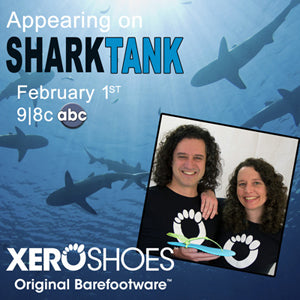
Xero Shoes on ABC's Shark Tank on Feb 1st!
For all of you who, for the last 3 years, have said to us, "You guys should be on Shark Tank!": You can stop saying it now You'll appreciate how good of a secret we've kept ;-) While Lena and I were taking our first vacation since starting our company, we got an email saying that we're scheduled to appear on Shark Tank on Friday, February 1st. The show is on ABC and airs at 9pm Eastern and Pacific, 8pm Central and Mountain time.For those who don't know the show, check out ABC.com. For those of you who know Dragon's Den from the U.K. and Canada... same idea (in fact, 2 of the same Sharks).In essence, Lena and I will be pitching 5 investors -- the Sharks -- to get an investment in our company and take it to the next level.We couldn't be more excited than to see what happens when we air, and when over 7 MILLION people discover our barefoot sandal company.BTW, we appear as Xero Shoes on the show and, if all goes well, we'll be using our new site at www.xeroshoes.mom starting next week!Fingers crossed!
Xero Basic
This is the tying style we use for our Custom-Made Xero Shoes.Once you get the tension just right, you slip 'em on and off in a second. People use this tying style for everything from walking to running marathons.First, a few tying tips and notes:Tying the Lace knot:This is the knot we most commonly use, especially with our 100% polyester laces. The "Lace Bead":This is the smallest "knot" you can make for your Xero Shoes. Tying a Figure-8 knot:If you have our original laces with the nylon core, you'll want to use this knot. Lacing tips:The basic running sandal tying patternXero Basic Tying StyleSame thing, reversed imageClick here to download step-by-step instructions for the Xero Basic.

How To Walk Barefoot: Techniques & Health Benefits
Most of you will read the title and think, "Do I really need instructions on how to walk? I have been doing it my whole life!" Others (hopefully) will think, "Finally, the answer to my burning question - have I been walking wrong in barefoot shoes?" Whichever group you are in, keep reading to learn about the surprising benefits of barefoot walking (or the benefits of zero drop/minimalist shoes), as well as instructions to get you started. What Is The Right Way To Walk? For those of you who are skeptical that there may be a better way to walk, let me ask you this: Do tribal women in Africa with water jugs balanced on their heads walk in the same way that Olympic race walkers do? Do either of those people walk in the same way that you do? The answer to both questions is obviously no. That's because walking isn't just walking. And you walk differently based on circumstances: Your gait will change if you’re walking uphill or downhill, walking fast or walking slow, or walking on different surfaces. But there are fundamental principles that you’ll discover in this article which can make your walking more efficient, enjoyable, and simply better for your body. How Going Barefoot Can Help You While it’s possible to learn optimal walking form in shoes, it’s faster and easier to be in your bare feet to discover the best way to walk. That’s because: Most modern shoes get in the way of proper walking form. They squeeze your toes together, alter your posture with elevated heels, and feel stiff, which could hamper your ability for your bones and joints to move naturally. When you’re barefoot, you get feedback from the ground which can help you find a natural, comfortable way to walk. You're quickly aware of your biomechanics: walking with proper form feels good, and improper form feels uncomfortable. One other advantage: By walking barefoot, you become your own best teacher about proper walking form. Listening to your body will help you discover your own secrets for walking efficiently, enjoyably, and easily. How Should My Foot Land When I Am Walking? Forefoot striking, midfoot striking, heel striking... does it make a difference when walking? That's actually the wrong question to ask. It's not the footstrike you should focus on. Your footstrike changes based on whether you’re walking uphill, downhill, fast, slow, accelerating, decelerating, and what surface you’re on. The most important aspect of barefoot walking is landing with your foot underneath your body (or close to that) rather than having it land too far out in front of your body, which is called “overstriding.” If you’ve explored barefoot running, you’ll recognize these ideas about walking are the same as for running. Where your foot lands in relation to your body, to your center of mass, is the most important thing. And the way you learn to have your foot land in the right place is all about using your glutes and hamstrings properly when you walk… and that’s what the instructions, below, will teach you to do. How Do I Train Myself To Walk Barefoot? If you want to learn the natural way to walk, follow these steps for learning how to walk barefoot properly (and more enjoyably!): Want to see this in action? Watch the video below, then use the steps here to dial in your form. Start by taking off your shoes—or get as close as possible to barefoot. Even socks can reduce the feedback your feet need to learn proper walking form. You want your feet free to move and feel the ground. If you do need to wear shoes, avoid ones that interfere with natural movement—like cushioned soles, elevated heels, narrow toe boxes, or stiff designs. Instead, choose minimalist shoes that are flexible, low to the ground, and foot-shaped, with a zero-drop sole—like Xero Shoes. Walk with your glutes, not your hip flexors Your glutes and hamstrings are your body’s “prime movers,” but most people rely too much on their hip flexors when they walk. Try this instead: Lift one foot slightly off the ground and don’t swing it forward Push your standing leg backward (like you’re skating) Let your lifted foot land naturally under your body Repeat on the other side This helps you move using your glutes, instead of pulling yourself forward with your hips. At first, it may feel a bit robotic—like a lunge, catch, reset pattern. That’s normal. As you get more comfortable: Don’t push as far back Let each step flow into the next Stay relaxed Listen to your body Don’t worry about how your foot lands—heel, forefoot, or flat is all fine. When you can feel the ground, your body will naturally adjust your stride. Over time, this walking style can feel smoother, more efficient, and you'll probably notice that other parts of your body relax too. Are Minimalist Shoes As Good As Walking Barefoot? Going completely barefoot isn't for everyone and isn't right for every occasion. The good news is that you can walk in minimalist (or barefoot) shoes instead. That's why we created Xero Shoes - so you can get all the benefits of being barefoot while still protecting your feet. Xero Shoes are designed with a thin, flexible sole and roomy toe box so your feet can move naturally. This allows you to strengthen your foot muscles and safely get feedback from your environment, similar to what you get in bare feet. NOTE: Not all minimalist shoes are, well, minimalist There are many footwear brands that advertise their shoes as “barefoot” or “minimalist.” And there are brands that advertise that they’re “zero-drop,” meaning that the heel isn’t elevated higher than the ball of the foot. People often use minimalist and zero drop shoes interchangeably, which isn’t accurate, since you can have a zero-drop shoe with a stiff, or highly cushioned sole. According do Dr. Irene Davis, the characteristics of a truly “barefoot shoe” are: A wider, foot-shaped toe box No arch support Little or no cushioning A flexible sole to allow for proper foot motion A thin sole to provide proper feedback about what you’re stepping on or in Light weight “Zero-drop” on a non-elevated heel According to Dr. Davis, shoes that don’t have ALL of those characteristics are “partial-minimalist shoes.” And her research shows that these types of shoes are the worst shoes to wear. That’s because, typically these shoes have cushioning that inhibits the feedback you need to naturally adopt a more ideal gait, and any heel lift will do something similar. Xero Shoes, according to Dr. Davis, checks all the “barefoot boxes.” Can I Walk Barefoot On Hard Surfaces? In a word: Yes Humans evolved in places with packed mud that’s as hard as concrete (and with rocks and twigs and pokey things that you would never want to step on). Your muscles, ligaments, and tendons are natural springs and shock absorbers. Better than any man-made cushioning material. And when you land with your foot underneath your body, you can engage your arch (regardless of whether you have flat feet or high arches), to give you a strong foundation. Have FUN! One of the best things about walking barefoot is how enjoyable it can be. Learning a new movement pattern takes a bit of time to become habitual, and it’s a different amount of time for each person. If it feels like work, stop. Rest. Then start again later. Remember that your brain integrates new things when you’re resting, not by working harder. So, use fun as your guide. And, if you want to try Xero Shoes, start shopping here, or take our Shoe Finder Quiz and get recommendations for your new favorite footwear. The information in this post does not take the place of medical advice. Only your doctor can provide advice, diagnosis, and treatment. Always consult a qualified health provider if you have questions about your health.
Why barefoot sandals and not minimalist shoes?
New to "barefoot shoes"? Trying to decide between the minimalist shoe options?I know the feeling. Back in 2009, when I knew I wanted the benefits of being barefoot, but with a bit of protection (and something that would let me get into restaurants), I tried everything.I LOVE our new minimalist shoes... they're built off of our sandal base so they're as close to barefoot as any shoe I've ever tried.That said, if you want a "more barefoot" experience, you'll want to try a sandal at some time. Here's why. Better Bare Foot Feel -- You want to feel the ground as much as possible, without having to worry about what you're stepping on. With our FeelTrue® outsoles, you get the closest thing to a barefoot feel, but with the protection you want. BTW, don't be fooled by some shoe companies that claim to have a 4mm or 6mm outsole. If the sole is stiffer, it'll reduce the ground-feel. And if they add any padding on the inside of the shoe, that contributes to the thickness. Natural Movement-- You want to let your feet move and your toes flex and wiggle without anything getting in the way. With the dual-direction chevron treads and the flexibility of our FeelTrue® rubber, our outsoles let you grip the ground. And with nothing restricting the top of your foot, your toes can lift and splay as much as you want. Anti-bacterial/Anti-Odor -- The air circulates around your foot, instead of having your feet wrapped up. Easier Fit -- Our sandals will fit your foot, no matter what shape it is -- curved, straight, narrow, wide. And you can trim some of them with a pair of kitchen scissors for a perfect fit. Lightweight -- At 3.4 ounces for a men's size 9 (the 4mm DIY kit), you'll have a hard time finding anything that feels like, well, you're almost barefoot. We've had customers forget they were wearing their Xero Shoes and go to bed with them still on! Multi-purpose -- People all around the world use Xero Shoes for everything from walking, to hiking, to camping, to yoga, to stand-up paddleboarding, to sea kayaking, to sky-diving, to running, to tackling 100-mile ultra-marathons! Convenient -- Xeros roll or fold and fit in small spaces. Stick 'em in your pocket so you have them handy for a hike or to get through the airport faster. Personal Style -- With 5 different sole colors, dozens of lacing styles, and even more decorative add-ons, you can have sandals that are high-performance, ultra-minimalist or fashion-forward and ready for a night on the town. In fact, those could be the same pair! Inexpensive -- I don't get how minimalist shoes and sandals can be $150-$200! Ours are under $80. Xero Shoes' sandals are a fraction of that price. You could get 5 pairs (one in each color! ;-) of our DIY kits for the price of some minimal running shoes. Long-Lasting -- People often ask how long Xero Shoes will last. True to our tire-sandal heritage, Xero Shoes come with a 5,000 mile sole warranty. Compare that to running shoes that you're supposed to replace every 300-500 miles!
Is there a best way to run?
The barefoot running boom has heated up a debate about the best way to run.Barefoot? Shoes? Barefoot shoes?Midfoot strike, heel strike, forefoot strike?In today's New York Times Online, Gina Kolata (whose writing and name I adore) goes after this question.Really, you can stop reading after the first sentence of the 2nd paragraph... and since that's the most important sentence, I'll just quote it here:Most of the scientific research is just inadequate to answer these questionsThe reasons that the research is inadequate are two-fold: Not enough research to explore the various aspects of the question Poorly designed research I can't say much about #1 other than to hope that more research is done. But if more research is done poorly, then what's the point.So what makes some of the running research, especially the studies that examine barefoot running, so poor? A number of factors: Bad cohort (the people in the study). Many of the studies solicit "barefoot runners" who've never actually run with bare feet. They may have spent some time in Vibram Fivefingers or, worse, in Nike Free... but wearing those is not the same as being barefoot (as many readers of this blog can attest). Many of the studies have too few runners. Many of the studies have runners that are, say, between the ages of 18-22 and on the college cross-country team (they're not typical runners). And if the number of runners in the test is small enough, it may be hard to extrapolate from their results. Missing factors. Many of the studies will look at one aspect of gait and ignore many others, and then try to conclude something about running mechanics. Rodger Kram's recent study on cushioning, for example, doesn't look at foot placement (overstriding or not), doesn't consider weight (which can effect the value of cushioning), type of cushioning, etc. I'm not saying that it's even possible to design a study that accounts for all these factors, but when you isolate things too much, it's hard to draw a useful conclusion... though everyone around you will draw it and then fight to the death defending or attacking it. Arbitrary variables. Many studies are done with runners on treadmills running at a fixed pace. The obvious question: is running on a treadmill identical to running on a track? Not in my experience. Also, is, say, 5 minute/mile pace my usual pace? We know that if you increase your cadence without increasing your speed, you can reduce force on your body and decrease the amount of time you spend on the ground... so by controlling one variable, you could be affecting the results of the study. Suffice it to say, I'm always glad when the media talk about running, and barefoot running in particular. But I find it unsatisfying when they merely regurgitate the "results" of a study without telling the reader whether the study is worth considering in the first place.Then there's the straw man problem, which is when you make up a person (complete with opinions) and then argue with that fictional person. There's a lot of that going on. Many barefoot writers (including myself, Pete Larson, Bill Katovsky, Mark Cucuzzella) have noticed that individual differences may be more important than "one right way" to do things, and that it's hard to get useful data by looking at genetic freaks (like Olympians). Yet the media loves to present these studies, and studies of studies, as if there's no reasonable thinking on either side of the fence. Not true.Again, as the article said up top: Most of the scientific research is just inadequate to answer these questions. Let's hope that changes.The content of this post does not constitute and is not intended to be a substitute for professional medical advice, diagnosis or treatment. Always seek the advice of a physician or other qualified health provider with any questions or concerns you may have about your health or a medical condition.
Barefoot Running - The Movie!
Our friends Michael Sandler and Jessica Lee have just released an incredibly ambitious project:Barefoot Running - The MovieShot in Hawaii, the footage is STUNNING (it'll make you want to run, run barefoot, run barefoot in Hawaii, or just move to Hawaii). I'm telling you, some of the shots in this movie make it feel like you ARE running around Hawaii, which as the Fall descends on Colorado, is quite a pleasant feeling.And it's practically everything Michael and Jessie know, and have been teaching, about barefoot running for the last 3+ years. I say "practically" because the section of footwear is notoriously lacking in a mention of us ;-) (or of huaraches, in general).I asked Michael about this. He said, "When we got to that section of the video, it was just me and the director and one camera... and we didn't have any of our sample footwear -- including Xero Shoes -- on the island. And we had just a few hours to get that section done!"Apology accepted ;-)He did, though, let me know that huaraches are featured in their upcoming book, Barefoot Walking (due out early 2013).BTW, if you don't know, Michael and Jessie were my introduction to running without shoes... and Michael's comment that if I built a website for what was at the time a sandal-making hobby he would include us in his upcoming book... well, that was the beginning of Xero Shoes.Congrats on an impressive and heartfelt project, M & J... and thanks for inspiring what has become the most satisfying business I can imagine.
"Barefoot Sandal" Start-up Hires Former Crocs Exec
“Barefoot Sandal” Start-up Xero Shoes Brings On Former Crocs Exec and Avia Co-founderBoulder, CO, October 2, 2012 – Dennis Driscoll, a 35-year footwear industry veteran who co-founded Avia Footwear and most recently worked as Global Design Director for Crocs, has joined Boulder-based barefoot running shoe start-up, Feel The World, Inc., the makers of Xero Shoes • Original Barefootware.Driscoll's roll at the bestselling "barefoot sandal" manufacturer is Chief Development Officer. Asked what attracted him to the product, he answers, "Xero Shoes are genuine, legitimate. We don't have to create ways to differentiate our product, because it is actually different."Regarding the company, and its co-founders, Steven Sashen and wife Lena Phoenix, Driscoll adds, "They are a smart team who've already proven themselves and their business. I like that my experience with all aspects of the footwear business can have a big impact here."Sashen and Phoenix reciprocate the admiration. "It’s highly unusual for someone of Dennis’s skills and caliber to work for a company at our stage. We're thrilled to have Dennis help take our product, and our company, to the levels we know they can attain."Dennis Driscoll started in the footwear business in 1978 with Osaga Athletic Footwear as the Director of Product Development. In 1981 he co-founded Avia Athletic Footwear as the VP of Product. Ten years later Dennis joined Wilson Sporting Goods as the Global Business Unit Director of Footwear. After a 7-year stint at Converse in senior product roles, Driscoll took a position at Doc Martens Footwear and moved to London as the Global Director of Product. In 2010, he went to work for Crocs as Global Design Director where he had a fourteen member design team in the US office and design centers in Padova, Italy and Tokyo, JapanABOUT:Feel The World, Inc. of Boulder, CO, manufactures Xero Shoes®, a high-tech upgrade on the traditional huaraches running sandal of the Tarahumara Indians of Mexico. Durable, stylish and affordable — Xero Shoes supply the fun and benefits of being barefoot, but with a layer of protection. Feel The World, Inc. launched in December 2009. To date, over 25,000 customers, ages 1 to 91, in more than 73 countries wear Xero Shoes for walking, hiking, yoga and gym-going, Crossfit, kayaking, jogging, and even running hundred-mile ultra marathons.
Xero Shoes Barefoot Sandals in COLOR!
Houston, we have color! I am extremely happy and proud to announce that you can now get Xero Shoes in 4 WAY COOL colors. And to celebrate, you can also save 20% if you order by October 2nd! In addition to our Coal Black, you can now get Mocha Earth, Electric Mint, Boulder Sky, and Hot Salmon. Combine those with our different lace colors... Well, here are a few combinations that you'll see around our office: Lena in her Mocha Earth with matching brown laces and a bunch of Brass Beads. Our office ultra-runner (and customer service manager), Bill, in Electric Mint with Purple laces (he puts 80-100 miles a week on these!) Steven, taking inspiration from an 8 year old customer who was the first one to wear non-matching laces, in Boulder Sky with White laces and a Hand Pendant (on the left) and Hot Salmon with Red laces (right). These new colors come in both Connect 4mm and Contact 6mm styles. And you can get them as kits or custom-made. Click here to order your Xero Shoes Colored Barefoot Sandals