latest News

Are we really Born To Run? Ask Christopher McDougall...
Are we really born to run? If so, what allows us to run as far as we do for as long (into old age) as we do?Here's what Chris McDougall, author of Born to Run, says at his TEDx talk:

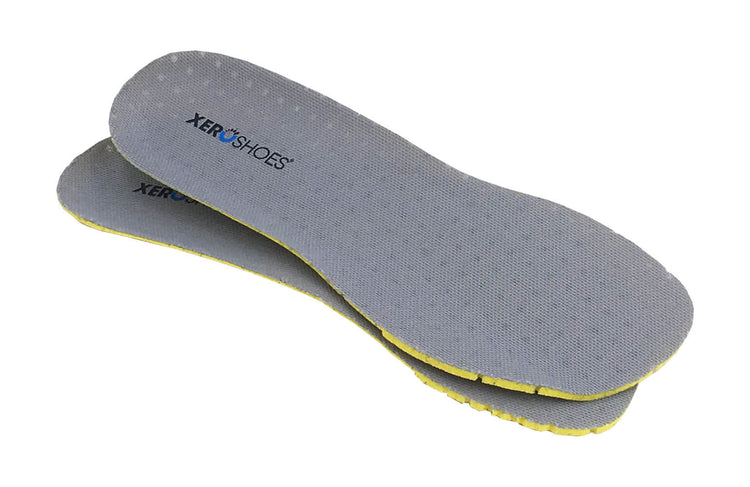
Orthotics vs. Barefoot Running
The only time I've worn anything other than my huaraches or my sprinting spikes in the last 16 months has been the 3 times I put on my old running shoes... so I could shovel snow. Those shoes have my $200 orthotics in them. And each time I've put them on, I have the same thought, "Geez, my foot can't even move. How did I wear these?" Often, when I'm out and about, someone will see my Xero Shoes and say, "Those look great, but I can't wear them. I need orthotics." "I used to think the same thing," I reply. "But let me ask you something. When has putting a cast on a limb and immobilizing it made it stronger?" "Well... never," they say, not wanting to admit the obvious fatal flaw in their reasoning. "Right. So you put a cast on your foot, called an orthotic, it gets weaker. Then you need a new cast to handle how much weaker you've gotten, and then... Oh, by the way," I mention, "you had your orthotic made while you were standing on a flat surface, didn't you?" "Yes." "Look at the shape of your shoe. Is it flat?" "Uh... no." "Because of how the shape of the shoe influences the way you move, you really need a different orthotic for each shoe. And it needs to be fitted based on how you move in that shoe, not how you stand, motionless, on the ground." "Hmmm..." I can see the glimmer of realization in their eyes. Well, now I have new ammunition in my anti-orthotic holster, an article in the New York Times by one of my favorite science writers, Gina Kolata: Close Look at Orthotics Raises a Welter of Doubts Let me give you a few highlights: Shoe inserts or orthotics may be helpful as a short-term solution, preventing injuries in some athletes. But it is not clear how to make inserts that work. The idea that they are supposed to correct mechanical-alignment problems does not hold up. Kinda sums it up, yes? Just wait, there's more. Gina interviews the top orthotics researcher, Benno M. Nigg, who says this about a man named Jason's flat feet: There is no need to “correct” a flat foot. All Jason needs to do is strengthen his foot and ankle muscles and then try running. without orthotics. Who knew? ;-) Well, *I* did... I've had really flat feet my whole life... until I started running and walking barefoot. Now I have some arch in my foot. BTW, I'm legally required to say that barefoot running shoes and sandals are not a medical treatment, I'm not a doctor, nor am I able to promise that by going without shoes you will develop arches in your feet. That said, do some Googling and you'll hear a lot of similar stories. Do with that what you will. Sometimes people with high arches give me the same story. "I need support because my arches are so high." Just because they're high, doesn't mean they're strong, especially if you've been supporting them all your life... remember the cast analogy. Now I'm not going to say that orthotics don't do something. But the question is: What do they do? How do they do it? And are they really helping? Dr. Joseph Hamill responds, in Gina's article: I guess the main thing to note is that, as biomechanists, we really do not know how orthotics work. Results from his studies cause Dr. Nigg to add: There was no way to predict the effect of a given orthotic. Hey, I'm not here to make anyone throw away their high-priced foot supports even though I haven't worn mine since 2009. But I am here to inspire a bit of wondering, a bit of curiosity, a bit of common sense, and a bit of critical thinking. Man lived without orthotics for a LOOOONG time. That doesn't mean they couldn't have benefited from them. But it means they got along without them. Maybe you can too. It doesn't cost much -- in time or dollars -- to set up an experiment for one. The content of this post does not constitute and is not intended to be a substitute for professional medical advice, diagnosis or treatment. Always seek the advice of a physician or other qualified health provider with any questions or concerns you may have about your health or a medical condition.
Can you really run in huaraches?
When you're used to hanging out with barefoot runners or, at least, with people who've read Born To Run, you forget how "normal people" think.One of the questions I'm most asked by non-barefoot people is: "Can you really run in those?"What amazes me about this question is not how people have forgotten that, for tens of thousands of years, this is exactly what humans wore to run. What amazes me is that I'm usually asked this question by someone who has been watching me run in my Xero Shoes.Silly humans.Well, don't just take my word for it, though.Check out this great race report by Alan Thwaits and see that, yes, you can run in these ;-)
What to do about the barefoot police?
Ever had a run-in with what some call "the barefoot police"? Ever feel like you need to give a little attention to your rebellious side?Then, you'll love the idea of making your Xero Shoes even MORE minimal!Check out: http://www.barefoot-healthy-blog.com/?p=248 to find out how.
Barefoot running isn't just running barefoot!
Back in 2010, I had the pleasure of attending the "Naked Foot 5k" barefoot race. Actually, it was a series of races including a kids race and a 1mile race and the 5k.It was a beautiful Colorado day, the course was wonderful, the organizers did a great job... but the runners scared the crap out of me!Of the 45 or 50 runners, a handful were barefoot (including Michael Sandler, author of Barefoot Running, who put in a FINE performance), and many wore VFFs.But regardless of whether they were totally barefoot or minimalist, the majority of the runners had one thing in common:They ran exactly like they were in shoes!Frankly, I'd never seen anything like it. Heel striking, over-striding (reaching your foot out in front of your center of mass), pulling against the ground instead of placing your foot under your body, pushing off with the toes instead of lifting the foot...It was watching people land on their heels that really blew me away (aside from the fact that the sound of their feet slapping on the ground just plain scared me).The point of barefoot running isn't to simply take off your shoes and do the same thing you were doing in shoes. It's to LISTEN to your body, to adjust your stride so that it doesn't hurt when you run. And, trust me, running barefoot as if you're in shoes HURTS.And you could see it in the runners -- the ones with good barefoot form finished the race and were tired from running but they had no problems with their feet. The ones with bad barefoot form had blisters and tears and abrasion. Their feet were hurting.A number of those runners came up to me after the race (I had a Xero Shoes booth) and showed me their battle-scarred feet, some with a sense of pride ("Look what I endured!") and others with resolution to "toughen up their feet for next time."I did everything I could to explain how running barefoot is not a matter of pushing through the pain, or developing callouses. That it's an opportunity to naturally find a light, easy stride that you can maintain without harming yourself. It's about being kind. It's about listening. It's about learning to make adjustments. It's about becoming your own coach. It's about more than just the fun of being out of shoes... it's about FUN for its own sake.The content of this post does not constitute and is not intended to be a substitute for professional medical advice, diagnosis or treatment. Always seek the advice of a physician or other qualified health provider with any questions or concerns you may have about your health or a medical condition." to the bottom of the blog post.
Barefoot Jason does it again (but in style, this time)
Barefoot Jason Robillard has done it again, running 2/3 of a 100 mile race in his Xero Shoes.But this time, he's got some extra fashion sense added:Now, some of you may know that I'm a sprinter. In fact, I ran "long-distance" at a meet last week when I did my first 200m race (and, for the sake of bragging, even though I totally lost it at the end, my time of 25.7 ain't bad for a 48 year old... I think I can get below 24 with a bit of work).So, to read Jason's great post about training for and running an ultra was just amazing to me.Enjoy it here: Burning River 100 mile Endurance Race Report by Jason Robillard
Long distance running in huaraches
About once a week I get a call or an email from someone who asks, "Can you run in Xero Shoes for long runs?"I usually point out to them that the Tarahumara are known for running ultra-marathons in huaraches, so, Yes.But some people respond, "Sure, but I'm not a Tarahumara Indian."True (but not necessarily relevant).So, how bout a hometown boy who just ran in his Xero Shoes huaraches... for SIXTY-EIGHT MILES!Read the rest of the thread about his run in the archive of the Runners World Barefoot Running forum
Xero Shoes on Boomer Alley Radio
Got 7 minutes for some laughs?Then you'll enjoy the interview I was invited to do on Boomer Alley Radio's "Better Mousetrap" show.You can hear it online on Saturday or Sunday:Saturday July 10 7 pm Pacific Time streaming on kfwb.com and live on KFWB NEWS TALK 980 AM (Los Angeles)Sunday July 11 4 pm Mountain Time streaming on radioconetwork.com and live on AM 1060 in Boulder/Denver metroENJOY!-Stevenp.s. I'll try to get a copy and put it up here after it airs.
Getting started with barefoot running
Imagine that you haven't lifted weights in a while... or ever.And imagine that you got the idea that you wanted to bench press 500 pounds.Would you go to the gym, put 500 pounds on the bar, and just go for it?Of course not. There's no way you could budge 500 on day one.Would you go to the gym and put, say, 100 pounds on the bar and lift it, over and over, until you felt tired... and then do a few more reps until you were wasted?I hope not.Would you take a small weight, like 20 pounds, and lift it for an hour or two?Boy, I wouldn't.But for some reason people think they can get into barefoot running with one of those plans.They think they can just whip off their shoes and replace one of their regular runs with a barefoot run. Or, worse, they think that even if they haven't run for a decade, it'll be fine to go for a 5 mile barefoot run. Or they get out for a barefoot run, feel some strain or pain in their feet or calves and think, "Oh, I'll just work through this, it'll be fine."And they pay the price.They wake up with freakishly sore calves or Achilles tendons. They get blisters. They get plantar faciitis. They get stress fractures.Look, over-training is over-training. Doing too much is doing too much.Especially with barefoot running, TAKE YOUR TIME. There's no rush to get to the point where you're running an ultramarathon every day for 1000 days in your bare feet. And there's no way to rush building up the strength in your muscles and ligaments and tendons, or to develop correct and efficient form.It happens as it happens. No sooner, no later.How long that'll be is a mystery. Maybe it only takes you a week or a month. Maybe it takes you a year.Who cares?First of all, it's not all-or-nothing. It's not like you won't be able to be barefoot and then, BAM, 6 months from now you can! It's a process. Maybe today you can only run 100 yards and then need to ice your feet for 3 days. That's fine. In a month, guaranteed, you'll be doing more. And a month after that, you'll be doing even more.Secondly, nobody is telling you to throw away your shoes the moment you realize you want to become a barefoot runner. Keep your shoes. Enjoy your shoes. And look forward to when you don't want or need them.But, please, give yourself time -- the amount of time that YOU need -- to make the transition.Honestly, there's enough to learn and experience and benefit from if all you ever do is an occasional 1 minute jog without shoes.I hate to toss out "prescriptions for living," but in this case I can't think of any better way to say it than, "Enjoy the journey... because there isn't really a goal."The content of this post does not constitute and is not intended to be a substitute for professional medical advice, diagnosis or treatment. Always seek the advice of a physician or other qualified health provider with any questions or concerns you may have about your health or a medical condition." to the bottom of the blog post.The content of this post does not constitute and is not intended to be a substitute for professional medical advice, diagnosis or treatment. Always seek the advice of a physician or other qualified health provider with any questions or concerns you may have about your health or a medical condition.
Another way to tie huaraches Tarahumara running sandals
Raymond Mack devised a "thong-style" method of tying huaraches running sandals. I haven't tried out the tying method yet, but this video makes me want to go to the beach ;-)
HBO Real Sports on Barefoot Running - Right or Wrong?
This week's (5/18) HBO's Real Sports with Bryant Gumbel did a feature on barefoot running.Did they get it right, or not?Well, overall, I'd say they were right on... with one exception I'll mention in a moment. They repeatedly pointed out that there are no studies that prove barefoot running reduces injuries, nor are there studies that show running in shoes causes them. They emphasized that if you want to make the transition to barefoot, you should start slow -- run for a short amount of time and distance (and build up slowly) to let your body learn to handle the new demands Chris McDougal repeatedly qualified his statements with "I believe..." And it's true, those of us who have moved to barefoot have our anecdotal evidence that we use to support us. What they missed: The point that Olympic athletes wear shoes is, in certain ways, irrelevant. Why? Because 99.9% of us are not Olympic athletes putting in the mileage they do, or running the speeds they do. And because if you look at their form, it's closer to barefoot than your average heel-striking jogger. The Nike Free is far from being a "barefoot shoe." Sure it flexes really well (and, full disclosure, I have 3 pair that I used to love wearing... but it's been a year since I last put mine on), but it has a big, padded, wide heel. Ditto on the Vibram Five Fingers (I love how they pronounced it correctly -- VEE-bram!). The VFFs have a lot more structure and support, plus a thickened sole on the ball of the foot and heel. And, of course, the biggest thing they got wrong was right in front of their face! HUARACHES! They talked about the Tarahumara running in huaraches, but when they gave advice about protecting yourself from things you could step on (or in!) in our modern world, they neglected to mention huarache running sandals (let alone Invisible Shoes... even though they had some film of runners in I-shoes).Ah, well... next time ;-)Anyone else see the show? What did you think?The content of this post does not constitute and is not intended to be a substitute for professional medical advice, diagnosis or treatment. Always seek the advice of a physician or other qualified health provider with any questions or concerns you may have about your health or a medical condition.
A new way to tie your huarache running sandals
Sonja came up with this novel way to tie your huarache running sandals that doesn't involve a cord coming up between your toes. As she points out, one potential drawback is that your foot can more easily shift forward on the sole compared to what happens when you have the cord between your toes... but, especially for people who have real trouble with that toe cord, or with the knot, you may want to try this out. I LOVE that people are getting so creative with huaraches!